![]()
![]()
![]()
![]()

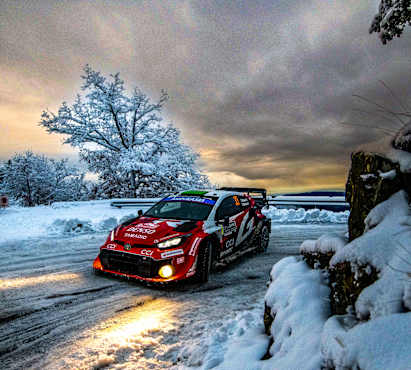
The roads on this epic motorsport adventure range from the ice and snow of Scandinavia to the stifling heat of Jordan - over surfaces including packed ice, smooth asphalt and boulder-strewn rocky tracks.
Unsurprisingly, the series is widely regarded as the most challenging motorsport competition in the world. Established in its current format in 1973, in 2010 drivers and manufacturers will battle it out for the 38th annual drivers’ and manufacturers’ championship trophies on rallies spread across 13 countries.
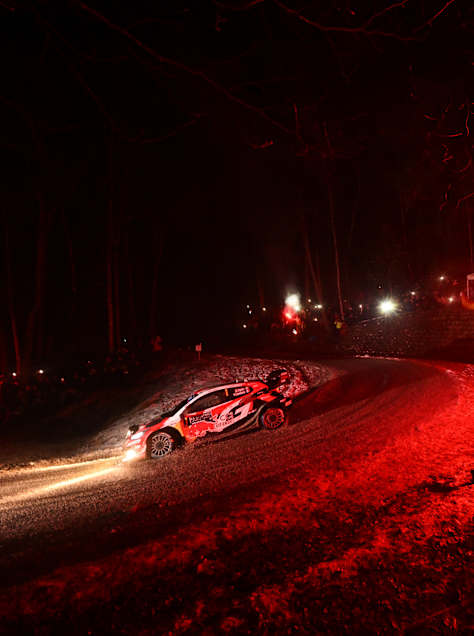
The competition itself is deceptively simple. Each rally is split into a number (typically between 15 and 25) of ‘special stages’ which are run on closed roads. Drivers tackle these stages one car at a time in an effort to complete them in the shortest time. Competitors drive to and from each special stage on normal roads, observing normal traffic regulations. During the special stages, a co-driver, or navigator, reads pace notes to alert the driver to the conditions on the road ahead.
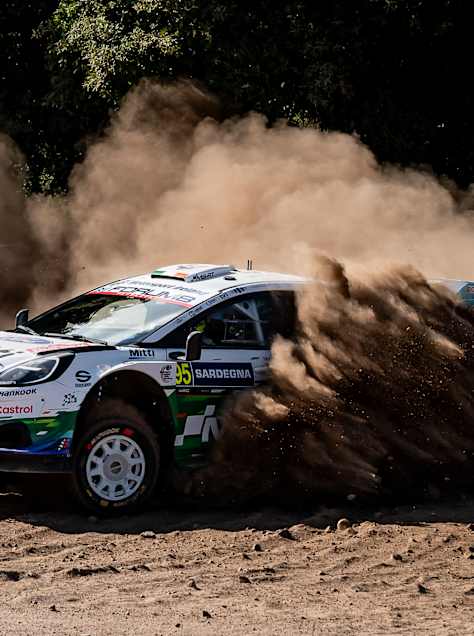
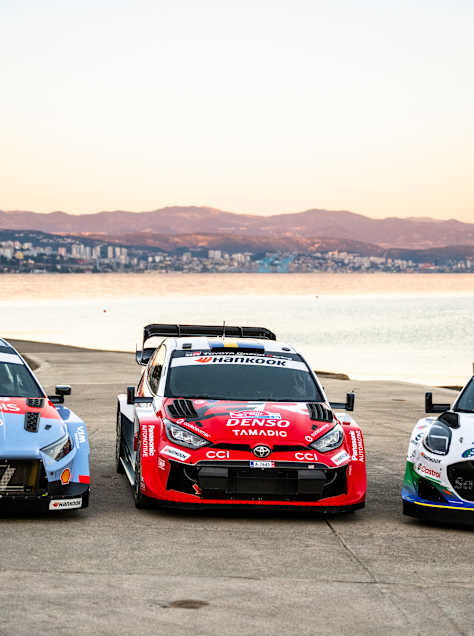
The cars competing at the top level of the sport are known as World Rally Cars, and are - for the last time this year - based on four-cylinder two-litre production cars. But while they might resemble the models found in a high street showroom, upgrades to the engine, transmission and suspension, mean a WRC car is a turbocharged, four-wheel drive monster that develops more than 300bhp and masses of torque. Regardless of the road surface, these machines can accelerate from a standing start to 100kph in around three seconds. Their top speed depends upon the gearing chosen for each rally, but 220kph is not unusual.
But World Rally Cars are not the only type of vehicle on the WRC stages. The championship also includes three support series for different classes of car: Production, Junior and Super 2000.
The Production Car World Rally Championship (P-WRC) is the FIA’s principal series for near-showroom spec four-wheel drive, turbocharged cars, while the Juinior World Rally Championship (J-WRC) is the place to find the stars of the future battling it out in two-wheel drive non-turbocharged hatchbacks. New for 2010 is the Super 2000 World Rally Championship (S-WRC) - a class specifically for two-litre, four-wheel drive non-turbocharged Super 2000 cars.
The WRC is regulated and controlled by the Federation Internationale de l’Automobile (FIA), the governing body for worldwide motorsport. Most WRC rallies follow the same basic itinerary: two days of reconnaissance on Tuesday and Wednesday, to enable the driver and co-driver to check the route, and ‘shakedown’ - in effect practice - on Thursday, followed by the competition itself on Friday, Saturday and Sunday. Some events also include ‘Super Special’ stages - short and compact sprint tests which often feature two cars racing head-to-head.