WRC
The sliding doors moments that defined a double WRC champion
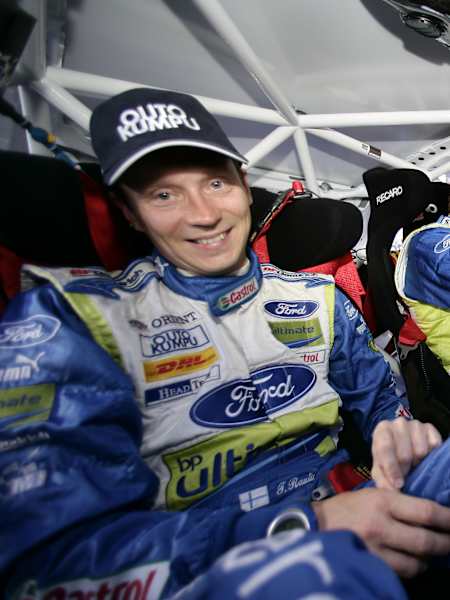
In a parallel universe, Timo Rautiainen, a self-proclaimed “tech freak”, would have spent a career working with computers. However, the IT world’s loss is very much the WRC's gain.
The Finn will be forever etched into WRC history as a world champion co-driver alongside Marcus Grönholm, a dedicated FIA sporting delegate, and the centre of one of the championship’s most famous and amusing stage-end interviews.
As is often the case in life, such achievements arise from sliding doors moments that lead to chance opportunities that then develop and define a career. That’s very much the case for Rautiainen, whose closest connection to an intercom system in his formative years came from exploring a love of technology that culminated in rigging up a communication system from the living room in his parents’ house in Finland to the sauna. A matter of years later, an intercom system attached to a crash helmet would become a vital part of the job calling notes for one Grönholm in the WRC.
Speaking in the latest episode of the WRC Backstories Podcast, hosted by Becs Williams, Rautiainen reveals that it wasn’t until his early teens when he received a first brush with rallying at the 1000 Lakes Rally. And it was only after studying computer science and working as a software analyst, teaching people how to use computers, that the prospect of competing as a co-driver arrived.
“I was interested in mopeds, motorbikes and cars from a young age but unlike many Finns I didn’t really follow rallies,” said Rautiainen.
“But going to the 1000 Lakes Rally for the first time, I think I was 13 years old as my brothers took me there and we followed the rally cars, and it was like ‘wow’, it was eye-opening.
“I think I was in my 20s when my friend from class and his brothers started to do rallying and I joined as a mechanic, but mechanic is a big word for that as I was changing tyres or refuelling from a jerry can and stuff like that. This friend, [Miko Kalliomaa], then started driving himself and he asked me in 1988 if I would like to join him to compete in the Finnish Junior Championship and I said yes and I went and did the licence and off we went.
“I couldn’t stop working [as a software analyst] because rallying was a hobby at that time, but from the beginning it was quite clear we had good success in the series and we were aiming high.”
© McKlein
This chance encounter with rallying soon became serious as Rautiainen and Kalliomaa won a rally to earn qualification into the Junior Championship before going on to take their Lancia Delta to second in the title race behind a young Marcus Grönholm, whom Timo would later join to become one of Finland’s most famous rallying double acts.
That came after Rautiainen decided to take a gamble, quitting his job to move to Germany to join Kalliomaa to compete in the 1989 Open German Championship. After three rounds and difficulties making it work financially, Timo moved back to Finland and ended up working back at the same IT company he had left. But this wasn’t the end of the rallying dream, it was merely the start, as by the end of that year he had teamed up with Grönholm after a chance meeting.
“There was a local rally in Espoo where I live and I was not taking part but I was spectating and I saw the Opel Ascona [Marcus was driving]. There was a nice young lady as the co-driver and I was wondering who that was. I saw the window and it was Grönholm–Grönholm so I thought it was his wife. I did not know him so well to know if he was married or not. Then I learned later it was his sister and later that evening I went to talk and ever since then we have been together.”
Little did he know at the time, but this partnership would go on to yield two world titles and 30 WRC rally wins. Such success seemed a pipedream as Grönholm and Rautiainen scratched together a budget to contest select rounds of the WRC, driving a trusty Toyota Celica GT-Four to varying degrees of success.
© McKlein
“We were looking at it rally by rally, looking at the bank accounts and trying to figure out how many rallies we could do abroad,” said Rautiainen. “There were not too many, one or two and some years three. They were expensive and when you have so few opportunities to show your speed you would try your maximum, which always ended up badly.
“It was a never-ending story and there were so many times we were sitting on the bank next to a destroyed car thinking this was the end of it. But at that time our team manager, Robert Gröndahl, he was a big help and without his connections to TTE [Toyota Team Europe] and his advice we would never have made it.”
It wasn’t until a series of impressive stage times at Rally Finland in 1998 that the hard work of the previous years eventually paid off.
“I remember Marcus was asking team managers and team principals in New Zealand back in 1998 prior to the rally to have a chat. It was challenging to even get an audience,” he says.
“But then after the stage times in Finland, suddenly everyone was interested. During the rally we were waiting to go into service on Friday evening and Jean-Pierre Nicolas at Peugeot Sport, half of his body was in our rally car. He was saying we have to meet tonight.
“In the evening Marcus kindly asked his family to move out of his hotel room and Jean-Pierre entered and they had a discussion and he offered a programme with Peugeot and explained they would develop the car in 1999. From 2000 we would participate for the full season and Marcus was very interested. But that is not all - after Rally Finland we had five offers on the table. Everybody wanted to have Marcus and all doors were open. He had a good feeling with Peugeot and decided to go with them. Good, it went.”
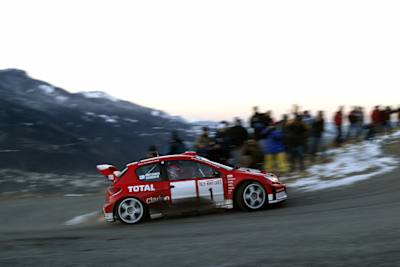
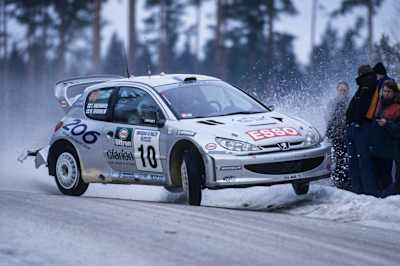
Good was an understatement as Grönholm and Rautiainen secured a maiden win in only their second WRC outing, driving the Peugeot 206 WRC in Sweden, beating then reigning world champion Tommi Mäkinen by 6.8sec. It was to be one of four wins as the duo pipped Richard Burns to a memorable world title by five points. But the title could have eluded them without Timo’s persuasiveness.
“It was a great feeling and we were happy of course, but still when Marcus did the deal with Peugeot we were not promised a full season in 2000, it was 10 rallies,” he explains. “After the win in Sweden on the Sunday evening after a wild party I went to Jean-Pierre and Corrado [Provera, head of Peugeot Sport] saying we have to have a full season. We know we are not that fast on Tarmac but we need those points, and then they gave us also the Tarmac rallies.”
Grönholm and Rautiainen went on to further etch their names into the WRC history books by winning a second title with Peugeot in 2002.
But world championship glory aside, in this internet-driven world we live in, Rautiainen is perhaps most famous around the world for being the subject of an unfortunate and painful incident competing for Peugeot at Rally Turkey in 2004. Its notoriety was triggered by a concerned Grönholm, who when interviewed at the end of a stage, uttered the now iconic words: “We had to stop [in the stage] because some stone came up and through Timo’s seat. Up in the ass of Timo.”
It has been shared thousands of times on social media, so it would be remiss not to revisit the subject. Rallying folklore was born there and then - but what actually happened?
“It does [live on in the memory]. A couple of years ago I decided that this is now the moment to make this a business so I registered a website ‘up in the ass of Timo’ but there is nothing there,” says Rautiainen.
“It was in Turkey - they had these concrete reinforced steels that they used to hammer into the ground to put tapes on to close the side roads. One of these steels had fallen down and was lying in the road, so we drove over it without seeing it and the front wheel made it into an angle so that it went through the rally car floor, through my seat and to my right bottom bone, and it hit it like a hammer.
“How I know it was reinforced steel is because obviously I loosened my belts and I could feel the steel and I burned my hand as it was so hot coming through the floor. I didn’t know why it was so painful but after we went to Rally Finland test and during tyre testing I had difficulties sitting in the car. It was painful and only then did I go to the doctor again and they took an X-ray and they found a bone was cracked.
“When we went to Rally Argentina I had problems sitting. The team bought me a seat cushion ring and that was fantastic. If you had seen this in technical checks nowadays it would be thrown out immediately but we managed to keep it for all rallies and even after Peugeot I took it with me to M-Sport.
“When we stopped rallying [at the end of 2007] the M-Sport mechanics had prepared a gift for me and they put this seat cushion in a transparent case with a label saying ‘fastest ass ring of the road’. That is in Marcus’ museum today.”
Listen to the full WRC Backstories Podcast to find out about life after Peugeot at M-Sport Ford, how he had to overcome physical pain for victory and reuniting with the Grönholm partnership.
