

WRC
How Evans, Solberg and Pajari took the 2026 WRC title fight to the wire
Thirteen rallies, three Toyota team-mates and a championship ultimately decided by five points.
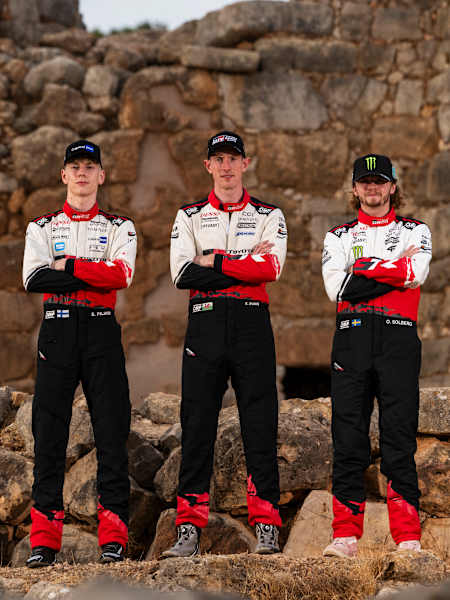
The shape of the 2026 WRC title fight changed repeatedly across the season before Elfyn Evans, Oliver Solberg and Sami Pajari arrived in Sardinia with everything still to play for.
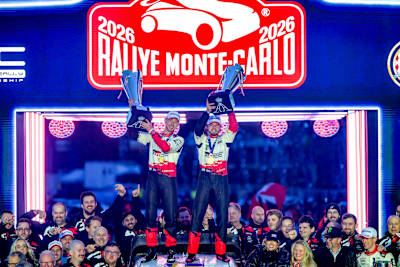
Few could have predicted quite how close the battle would become when Oliver Solberg made the perfect start to his first full Rally1 campaign by winning Rallye Monte-Carlo.
Solberg and Elliott Edmondson took victory on their first event as full-time Toyota Gazoo Racing Rally1 crew, with Evans finishing second as Toyota locked out the podium. Three weeks later in Sweden, however, Evans responded by leading home Takamoto Katsuta, Pajari and Solberg in a Toyota 1-2-3-4 and moved to the top of the championship.
© WRC
The opening months were anything but straightforward from there. Evans and Solberg both hit trouble in Kenya, where Katsuta claimed his maiden WRC victory and Pajari finished third, before Croatia brought more disruption. Evans and Solberg went off on Friday, while Pajari stayed in contention and was eventually promoted to second when Thierry Neuville crashed out of the lead on the Wolf Power Stage.
Katsuta left Croatia as championship leader, seven points ahead of Evans, but the balance shifted again two weeks later in the Canary Islands. Sébastien Ogier won after a close fight with Solberg, whose challenge ended when he crashed with two stages remaining, while Evans and Pajari completed an all-Toyota podium in second and third.
That result returned Evans to the championship lead. He would stay there for the rest of the season.
© WRC
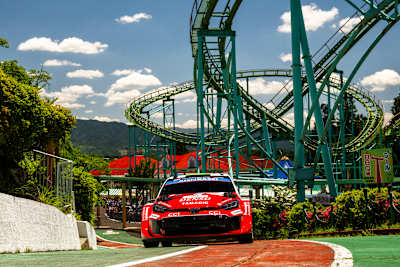
Portugal reinforced the early picture. Solberg finished second and Evans third after late punctures affected both Ogier and Pajari, before Evans delivered one of his strongest weekends of the year in Japan.
Victory around Toyota City was his second of the season and carried him to 151 points at the halfway stage, 20 clear of Katsuta. Solberg sat third in the standings, with Pajari fourth, as Toyota occupied the top five positions.
At that stage, Evans had established himself as the benchmark through consistency as much as outright victories. He had been on the podium five times in seven rallies and had continued to collect Sunday points even when a major result was out of reach.
The second half of the year changed the complexion of the fight completely.
Evans finished fifth on the Acropolis before opening the road in Estonia, where Pajari delivered the breakthrough performance that had been threatening to come.
© WRC
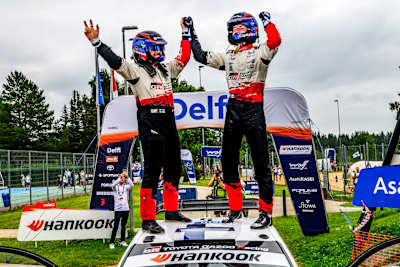
The Finn led from start to finish, won 12 stages and beat Solberg by 19.5sec to claim his maiden WRC victory. Pajari left Estonia third in the standings, 33 points behind Evans, while Solberg banked 27 points from second place, Super Sunday and the Wolf Power Stage.
Two weeks later, Pajari won again.
His home victory in Finland confirmed that Estonia had been no one-off and, by the time the championship moved to Paraguay at the end of August, the 24-year-old had become Evans’ most immediate threat.
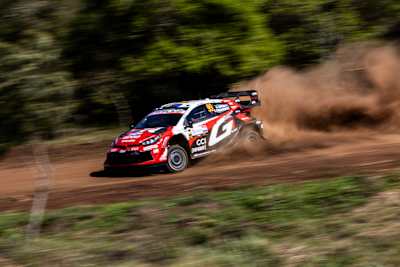
Paraguay strengthened that position further. Pajari and Marko Salminen completed a third consecutive victory, becoming the first crew in WRC history whose maiden three wins had come back-to-back-to-back.
Evans finished fourth after a weekend in which he admitted his approach had been too conservative, while Solberg’s rally was compromised when his engine stopped under braking while he was leading on Friday and a puncture later added to the delay.
Even so, Solberg won the Wolf Power Stage and remained in touch.
© WRC
The standings after Paraguay told the story of just how much the picture had changed. Evans still led on 216 points, but Pajari had closed to 196 after arriving at the event 30 points adrift. Solberg was third on 175.
Chile then brought Solberg firmly back into the equation.
He led for much of the rally and withstood pressure from both Evans and Ogier to take his second win of the season. Evans had been running second and leading the Super Sunday classification before a damaged front-left tyre on the penultimate stage forced him to stop and change the wheel, dropping him to fifth.
Pajari inherited fourth, while Evans recovered four points with second-fastest time on the Wolf Power Stage.
The result compressed the championship again. Evans remained in front with 230 points, Pajari followed on 213 and Solberg, having taken 34 points from the weekend, was just four further back on 209.
Then came the final twist before the cars had even reached Sardinia.
© WRC
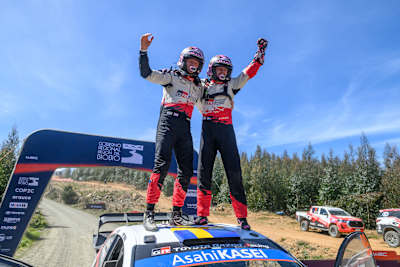
The cancellation of Rally Saudi Arabia meant Italy would become the 13th and final round of the season, turning what had been expected to be the penultimate event into an immediate title decider.
Evans arrived with a 17-point advantage over Pajari and 21 over Solberg. With 35 available, all three could still become world champion for the first time.
Solberg immediately set about reducing the deficit. He won Thursday evening’s Ittiri Arena Show and, despite tyre damage on Friday morning, fought his way to third by the end of the opening leg. Evans, running first on the road, ended Friday sixth while Pajari remained between his two title rivals.
Saturday morning transformed the contest.
Solberg won SS9 and SS10 to overhaul Thierry Neuville and take the rally lead. With Evans still sixth at that point, the Welshman’s provisional championship advantage had been reduced from 21 points at the start of the rally to just four.
Neuville’s retirement on SS11 helped Evans by promoting both him and Pajari one position, before Adrien Fourmaux’s later recovery altered the order again. By Saturday night Solberg led the rally, Pajari held third and Evans was fifth.
The provisional championship stood at Evans 240, Solberg 234 and Pajari 228, with 10 Sunday points still available.
Pajari remained mathematically in contention, although by then he required further changes in the overall order as well as a major haul of Sunday points. The focus increasingly shifted towards Evans and Solberg.
Sunday delivered one final swing.
Evans punctured on SS16 and was forced to stop to change the wheel. He retained fifth overall, but any hope of scoring from the Super Sunday classification was gone.
That left the title effectively resting on the Wolf Power Stage.
Evans completed his run and scored three points. Solberg then started the final stage knowing he needed to beat his team-mate’s time.
He was ahead through the splits and still on course to do so as the finish approached, but went off just two corners from the end. Solberg recovered and reached the finish, preserving his Rally Italia Sardegna victory but losing the Wolf Power Stage points he needed to complete the championship turnaround.
© WRC
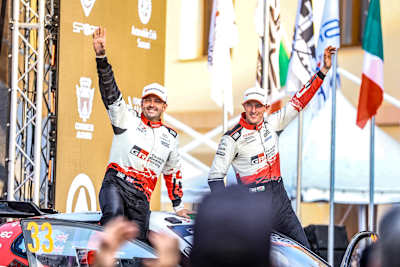
Evans and Scott Martin were world champions.
The final standings reflected just how little separated the three protagonists after an entire season. Evans finished on 243 points, Solberg on 238 and Pajari on 237.
Solberg ended his first full Rally1 season as championship runner-up and a three-time WRC winner, while Pajari finished just one point further back after a campaign transformed by his mid-season hat-trick.
Evans, meanwhile, had led the standings continuously from the Canary Islands onwards and finally converted that consistency into the title he had chased for so long.
After thousands of competitive kilometres, 13 rallies and a championship that repeatedly changed shape, only six points separated first from third.


