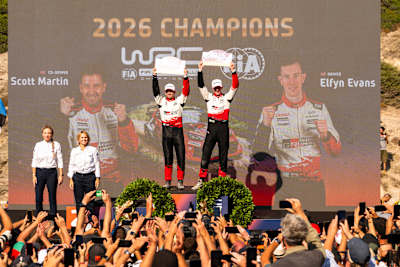
Five seasons later, it signed off with Elfyn Evans finally becoming world champion in a title fight that lasted until Sardinia’s final corners.
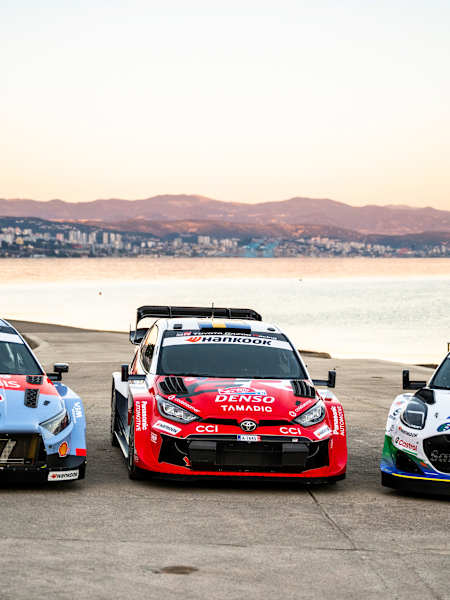
The Toyota GR Yaris Rally1, Hyundai i20 N Rally1 and Ford Puma Rally1 have now completed their final campaign under the regulations introduced in 2022, ahead of new Rally1 machinery arriving under the WRC27 rules next year.
Their arrival, for the championship’s 50th season, gave drivers plenty to get to grips with. A 100kW electric motor joined the established 1.6-litre turbocharged engine, lifting peak combined power output beyond 500hp. Alongside the additional acceleration came 100 per cent sustainable fuel and a new tubular safety cell, making this one of the most significant technical changes in the WRC’s history.
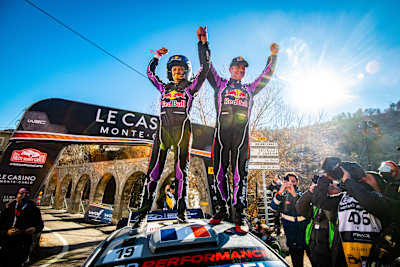
Nine-time world champion Loeb had wasted little time putting it to use. His duel with Sébastien Ogier brought a familiar rivalry into unfamiliar machinery, with Loeb emerging victorious for M-Sport-Ford after Ogier suffered a late puncture.
At 47, Loeb became the oldest winner of a WRC round. Beside him, Isabelle Galmiche made history of her own: on her first top-level start, she became the first woman to win a WRC event since 1997. The Puma’s debut could scarcely have been more memorable.
By the end of the season, however, a driver at the other end of the age scale had taken centre stage.
Kalle Rovanperä’s speed, particularly when conditions were at their most difficult, made him the benchmark in the GR Yaris. Six victories carried him and Jonne Halttunen to their maiden titles, secured with a win in New Zealand just one day after his 22nd birthday.
The youngest world champion in WRC history then backed it up. Rovanperä and Halttunen retained their crowns in 2023, confirming that their breakthrough season had been the beginning of something much bigger.
The Puma continued to make its mark, too. Ott Tänak took it to victory on Sweden’s snow and Chile’s gravel in 2023, while Adrien Fourmaux’s five podiums the following year underlined his progress at the highest level.
For sheer impact, Mārtiņš Sesks’ home appearance in Latvia in 2024 was hard to overlook. On only his second Rally1 outing, and his first with hybrid power, the Latvian won two stages and fought for a podium against the championship’s established stars. A transmission problem on the final test denied him third place, but his performance had already announced his arrival.
Hyundai’s i20 N produced some of the generation’s closest battles. In Sardinia in 2024, Tänak snatched victory by just 0.2sec after a final-stage puncture for Ogier, equalling the narrowest winning margin in WRC history. Podium lock-outs at the Acropolis in 2022 and 2024 demonstrated the strength of Hyundai’s crews on demanding gravel.
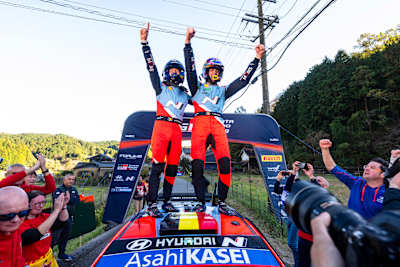
For Thierry Neuville, though, the defining moment came in Japan later in 2024.
After five championship runner-up finishes, the Belgian and co-driver Martijn Wydaeghe finally secured their first outright world titles. Neuville had led the standings since winning the opening round in Monte-Carlo; in Japan, the years of trying finally brought their reward.
Even then, the drama continued around him. Toyota overturned Hyundai’s advantage in the manufacturers’ championship on the final Wolf Power Stage, taking the title by just three points.
The cars changed again for 2025. Hybrid units were removed, minimum weight fell by 80kg to 1180kg, and a smaller air restrictor maintained an equivalent power-to-weight ratio. Drivers had a revised package to master, with the sustainable fuel and distinctive aerodynamic bodywork remaining.
There was soon another breakthrough. Oliver Solberg and Elliott Edmondson won on their Toyota Rally1 debut in Estonia, turning a one-off opportunity into a commanding maiden victory after just two days of testing.
Finland then showed just how much pace the machinery still possessed. Rovanperä’s long-awaited home victory came at a winning average speed of 129.9kph, making it the fastest rally in WRC history. Two passes through Ouninpohja brought the weekend to its conclusion, with Toyota filling all five leading positions.
For Ogier, driving the GR Yaris through that famous stage was “a fantastic feeling to drive this car on this epic stage”. Later that season, he and Vincent Landais became world champions, Ogier equalling Loeb’s record of nine drivers’ titles.
The final campaign brought fresh winners in Sami Pajari and Takamoto Katsuta, while Solberg returned as a full-time Toyota driver and took his title challenge all the way to Sardinia.
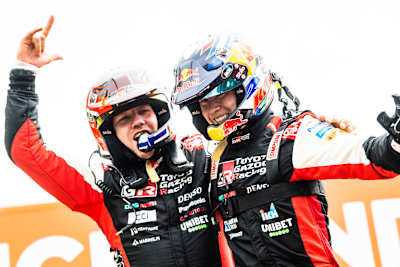
There, the generation’s last rally became one of its most dramatic. Evans stopped to change a punctured tyre on the penultimate stage, leaving the championship hanging on the Wolf Power Stage. Solberg was ahead on the splits before running off the road two corners from the finish, allowing Evans and Scott Martin to claim the crown after five runner-up finishes.
Evans became the third driver to win his first outright world title in this generation of cars. Solberg still won the rally, giving the GR Yaris Rally1 its 48th victory and completing a cycle in which Toyota claimed all five manufacturers’ championships.
Part of the generation’s technical legacy will continue into 2027. The WRC27 safety cell builds on the structure introduced in 2022, while the new regulations open the championship’s highest level to a broader range of manufacturers and independent constructors.
Rally1’s first generation in numbers